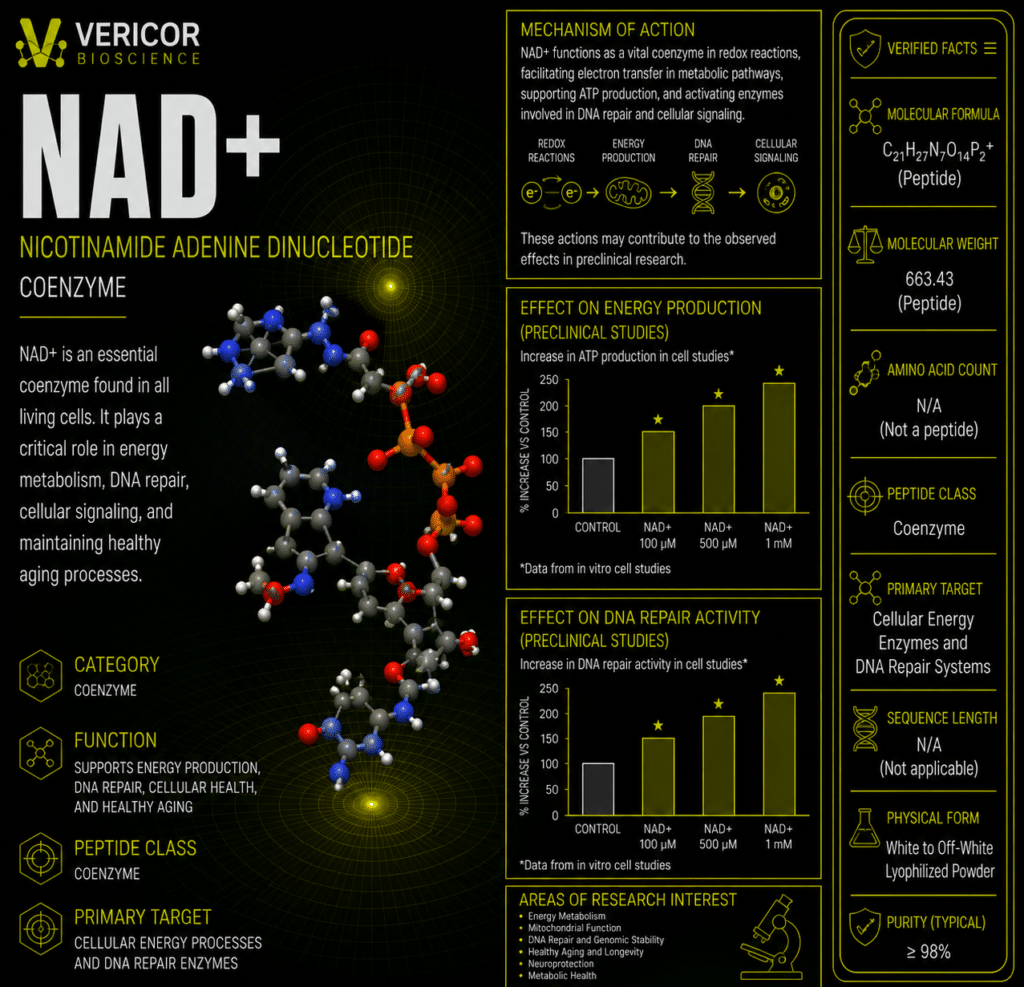
NAD+ is an essential molecule found in every living human cell. It helps cells turn nutrients into usable energy and supports enzymes involved in DNA repair, stress responses, and cellular signaling. Interest in NAD+ has grown across the United States, especially among people researching healthy aging, fatigue, metabolic health, supplements, and intravenous wellness treatments.
However, the popularity of NAD+ has moved faster than the clinical evidence. Although researchers understand many of its basic biological functions, scientists have not proven that raising NAD+ levels will prevent aging, extend human life, cure chronic fatigue, reverse cognitive decline, or deliver the broad benefits often promoted online.
From reviewing the scientific literature, the most important distinction is between raising a laboratory marker and improving a person’s health. Some NAD+ precursors can raise NAD-related metabolites in blood. Nevertheless, higher blood levels do not automatically produce better energy, memory, athletic performance, or longevity.
Featured definition: What is NAD+?
NAD+ stands for nicotinamide adenine dinucleotide, a coenzyme found in every living cell. It helps convert food into cellular energy and supports enzymes involved in DNA repair and cell signaling. Although NAD+ biology is well established, many anti-aging, fatigue, and wellness benefits promoted to consumers remain under clinical investigation.
Table of Contents
- What NAD+ is
- Why cells need NAD+
- NAD+ and cellular energy
- NAD+ in DNA repair and signaling
- Does NAD+ decline with age?
- NAD+ versus NADH
- NAD+ supplements and precursors
- What human studies show
- NAD+ IV therapy
- NAD+ injections and compounding
- Potential benefits and evidence limits
- Safety and side effects
- Product-evaluation checklist
- People Also Ask about NAD+
- Expert NAD+ Q&A
- Conclusion
What Is NAD+?
NAD+ is short for nicotinamide adenine dinucleotide. It is a naturally occurring coenzyme found in the cells of humans, animals, plants, and many microorganisms.
A coenzyme is a small molecule that helps an enzyme complete a chemical reaction. Enzymes are proteins that accelerate biological processes. Without enough of the required coenzymes, many enzymes cannot work efficiently.
NAD+ exists in an oxidized form known as NAD+ and a reduced form known as NADH. These two forms repeatedly exchange electrons during metabolic reactions.
This electron transfer helps cells process:
- Carbohydrates
- Fats
- Amino acids
- Alcohol
- Other energy-containing molecules
Therefore, NAD+ is not simply an “energy supplement.” Instead, it is part of the biochemical system that allows cells to extract and transfer energy from nutrients.
NAD+ also serves as a required substrate for several enzyme families. These include sirtuins, poly-ADP-ribose polymerases, commonly called PARPs, and enzymes such as CD38. These pathways influence DNA repair, cellular stress responses, inflammation, calcium signaling, and gene regulation.
Why Does the Human Body Need NAD+?
The body needs NAD+ because thousands of cellular reactions depend directly or indirectly on it.
Its two broad roles are:
- Supporting energy-related oxidation and reduction reactions
- Serving as a consumable substrate for signaling and repair enzymes
In energy metabolism, NAD+ accepts electrons and becomes NADH. NADH can then deliver those electrons to other cellular systems, including processes associated with mitochondrial energy production.
In signaling reactions, enzymes may break down NAD+ to complete their tasks. As a result, cells must continually produce and recycle it.
The body can make NAD+ through several pathways. It can build the molecule from the amino acid tryptophan, vitamin B3-related compounds, and recycled products of NAD+ breakdown.
Important precursors include:
- Nicotinic acid, also called niacin
- Nicotinamide, also called niacinamide
- Nicotinamide riboside, or NR
- Nicotinamide mononucleotide, or NMN
- Tryptophan
These compounds enter different steps of NAD+ production. However, they are not identical, and evidence for one precursor should not automatically be applied to another.
How NAD+ Supports Cellular Energy
NAD+ plays a central role in the chemical reactions that turn food into cellular energy.
When a person eats carbohydrates, fats, or proteins, the digestive system breaks them into smaller molecules. Cells then process those molecules through pathways such as glycolysis, the citric acid cycle, and fatty-acid oxidation.
During these reactions, NAD+ accepts high-energy electrons and hydrogen. It is then converted into NADH.
NADH carries those electrons to the mitochondrial electron transport chain. Mitochondria use the transferred energy to help produce adenosine triphosphate, or ATP.
ATP is often described as the cell’s energy currency. Cells use it for:
- Muscle contraction
- Nerve signaling
- Protein production
- Active transport across membranes
- Tissue repair
- Temperature regulation
- Many other biological functions
However, it would be misleading to claim that taking NAD+ automatically creates an immediate energy boost. Cellular energy depends on many factors, including oxygen delivery, sleep, nutrition, thyroid function, blood glucose, cardiovascular health, mitochondrial function, and the presence of illness.
A person experiencing persistent fatigue needs an appropriate medical evaluation rather than assuming low NAD+ is the cause.
NAD+ and the Mitochondria
Mitochondria are structures inside most cells that help generate ATP. Because NADH supplies electrons to mitochondrial energy pathways, the NAD+/NADH balance is essential for normal metabolism.
The ratio between NAD+ and NADH can influence:
- Glucose metabolism
- Fat metabolism
- Oxidative stress
- Mitochondrial signaling
- Cellular adaptation to nutrient availability
Nevertheless, mitochondria do more than produce energy. They also help regulate cell death, calcium balance, heat production, and communication between cellular compartments.
This complexity matters because a single blood test cannot fully describe NAD+ activity across every tissue. The liver, muscles, brain, blood, and fat tissue may have different concentrations and metabolic demands.
Therefore, marketing claims based on a general “NAD level” may oversimplify how NAD+ functions in the body.
NAD+ and DNA Repair
DNA is exposed to damage from normal metabolism, environmental chemicals, radiation, inflammation, and replication errors.
Cells have repair systems that identify and correct many forms of DNA damage. PARP enzymes participate in some of these processes and consume NAD+ while working.
When DNA damage is extensive, PARP activity may increase. This can contribute to greater NAD+ consumption.
NAD+ does not directly “repair all DNA” by itself. Instead, it supports enzymes involved in specific repair pathways.
This distinction is important. Claims that an NAD+ supplement reverses genetic damage, restores youth, or protects against every age-related condition go beyond what clinical evidence has established.
In addition, DNA repair is only one part of healthy aging. Other relevant factors include:
- Immune function
- Hormonal changes
- Cardiovascular health
- Protein quality control
- Cellular senescence
- Stem-cell function
- Epigenetic regulation
- Mitochondrial health
- Environmental exposure
- Lifestyle patterns
NAD+ interacts with several of these processes, but it is not a single master switch that controls aging.
NAD+ and Sirtuins
Sirtuins are a family of enzymes that require NAD+ for their activity.
Different sirtuins are found in the nucleus, cytoplasm, and mitochondria. They influence proteins involved in metabolism, cellular stress, DNA stability, and other biological functions.
Animal and laboratory studies have connected sirtuin activity with responses to calorie restriction, exercise, nutrient availability, and aging. Therefore, some marketers describe NAD+ products as “sirtuin activators.”
That description can be misleading.
Providing more NAD+ does not guarantee that every sirtuin will become more active in a beneficial way. Sirtuin activity also depends on:
- Tissue type
- Gene expression
- Existing NAD+ availability
- Cellular stress
- Enzyme regulation
- Competing NAD+-consuming pathways
- The person’s health status
Moreover, promising findings in yeast, worms, mice, or isolated cells do not establish that an NAD+-boosting product extends human lifespan.
Does NAD+ Decline With Age?
Researchers have reported age-related reductions in NAD+ in several animal tissues. Some human studies have also found lower NAD+-related measurements with age.
However, the human evidence is not as simple or consistent as online summaries often suggest.
A 2025 review concluded that consistent evidence for an age-related NAD+ decline in humans had been observed in only a limited number of studies. Differences in tissue type, measurement methods, participant health, age range, and study design make broad conclusions difficult.
Possible reasons for reduced NAD+ availability may include:
- Greater activity of NAD+-consuming enzymes
- Chronic inflammation
- Oxidative stress
- DNA damage
- Reduced precursor availability
- Changes in NAD+ synthesis
- Metabolic disease
- Altered mitochondrial function
Even when NAD+ decreases with age, two separate questions remain:
- Does the decline contribute directly to disease?
- Will raising NAD+ improve meaningful health outcomes?
The first question does not automatically answer the second.
A biomarker may be associated with aging without being the best or safest treatment target. Therefore, controlled clinical trials must test whether an intervention improves symptoms, function, disease risk, or quality of life.
NAD+ vs. NADH
NAD+ and NADH are two chemical forms of the same coenzyme system.
| Feature | NAD+ | NADH |
|---|---|---|
| Chemical state | Oxidized | Reduced |
| Primary role | Accepts electrons | Carries and donates electrons |
| Metabolic relationship | Converts to NADH after accepting electrons | Converts back to NAD+ after transferring electrons |
| Cellular importance | Supports energy reactions and NAD+-dependent enzymes | Supports electron transfer and ATP production |
| Consumer products | Sold in some supplements and compounded preparations | Also sold as a dietary supplement |
| Proven anti-aging treatment? | No | No |
The plus sign in NAD+ refers to the molecule’s charge. It does not mean “enhanced NAD.”
Both forms are necessary for normal metabolism. Therefore, the balance between them may be as important as the absolute quantity of either form.
NAD+ vs. NADP+
NADP+ is a related but distinct coenzyme.
NAD+ is used heavily in pathways that break down nutrients and transfer energy. In contrast, NADPH, the reduced form of NADP+, is often used in reactions that build molecules and protect against oxidative stress.
NADPH supports processes such as:
- Fatty-acid synthesis
- Cholesterol synthesis
- Antioxidant regeneration
- Detoxification reactions
- Immune-cell activity
Although the names are similar, NAD+ and NADP+ are not interchangeable.
NAD+ Supplements and NAD+ Precursors
Many products marketed as “NAD+ supplements” contain precursors rather than NAD+ itself.
A precursor is a compound the body may use to make another substance.
Common NAD+-related ingredients include:
- Niacin
- Niacinamide
- Nicotinamide riboside
- Nicotinamide mononucleotide
- Tryptophan
- NADH
- NAD+
The strongest evidence that a product raises blood NAD-related metabolites does not necessarily belong to direct oral NAD+.
Researchers have more commonly studied NR and NMN because these molecules can enter NAD+ production pathways. Human studies show that NR and NMN can raise certain circulating NAD+ measures under specific conditions. For example, a recent randomized study involving 65 healthy participants reported increased circulating NAD+ after 14 days of NR or NMN supplementation.
However, raising circulating NAD+ is a pharmacodynamic finding, not proof of broad clinical benefit.
Researchers must still determine whether supplementation improves outcomes such as:
- Physical function
- Insulin sensitivity
- Cognitive performance
- Cardiovascular health
- Fatigue
- Recovery
- Disease progression
- Longevity
Current results across these areas are mixed, limited, or condition-specific.
Comparing NAD+, NR, NMN, and Vitamin B3
| Compound | What it is | Relationship to NAD+ | Human evidence | Key limitation |
| Direct NAD+ | The complete coenzyme | Already in final molecular form | Limited oral and IV outcome data | Absorption and tissue delivery are not fully established |
| Nicotinamide riboside | Vitamin B3-related precursor | Converted through NAD+ synthesis pathways | Can raise NAD-related blood measurements | Health benefits remain inconsistent |
| Nicotinamide mononucleotide | Direct NAD+ precursor | Converted into NAD+ through cellular pathways | Can raise some NAD-related measurements | Long-term outcome data are limited |
| Niacin | Vitamin B3 form | Used in NAD+ synthesis | Established nutritional role; prescription uses differ | Can cause flushing and dose-related adverse effects |
| Niacinamide | Vitamin B3 form | Supports NAD+ production | Established nutritional function | High doses can cause adverse effects |
| Tryptophan | Essential amino acid | Can contribute to de novo NAD+ synthesis | Established dietary role | Only part of its metabolism leads to NAD+ |
| NADH | Reduced form of NAD+ | Participates in electron transfer | Limited condition-specific research | Not equivalent to raising tissue NAD+ |
Products should not be judged solely by the amount printed on the front label. Form, dose, purity, storage, testing, and clinical evidence all matter.
What Do Human NAD+ Studies Show?
Human research has produced three broad findings.
First, selected precursors can raise NAD+ or related metabolites in blood. This effect has been reproduced in several short-term studies.
Second, many interventions appear reasonably tolerated during the limited study periods and doses tested. However, short-term tolerability does not establish lifetime safety.
Third, clinical benefits are inconsistent. Some studies have reported changes in selected metabolic, vascular, inflammatory, or neurological measures. Others have found no meaningful improvement in the primary outcomes.
A 2026 systematic review examined human research involving NAD+-boosting approaches, including NR, NMN, and parenteral NAD+. It concluded that evidence for wellness and anti-aging benefits remains limited and heterogeneous, particularly for intravenous or intramuscular NAD+ itself.
Likewise, a major clinical review found that the biology is promising but emphasized gaps between preclinical results and demonstrated human treatment effects.
Therefore, the responsible conclusion is not that NAD+ research has failed. Rather, it is that the science has not yet supported many of the sweeping consumer claims.
Can NAD+ Reverse Aging?
No intervention has been proven to reverse normal human aging through NAD+ alone.
Aging involves progressive changes across nearly every organ system. These changes include DNA damage, altered proteins, immune shifts, vascular changes, stem-cell exhaustion, cellular senescence, hormonal changes, and accumulated environmental exposure.
NAD+ participates in several pathways related to aging. As a result, improving NAD+ metabolism may eventually have clinical value for selected conditions.
However, “involved in aging” is not the same as “reverses aging.”
A convincing anti-aging therapy would need to demonstrate outcomes such as:
- Reduced disease incidence
- Improved physical function
- Better cognitive health
- Longer disability-free survival
- Reduced mortality
- Acceptable long-term safety
Higher blood NAD+ by itself does not prove any of these outcomes.
Does NAD+ Improve Energy?
NAD+ is necessary for energy metabolism, but this does not mean supplementation treats every form of low energy.
Fatigue can be caused by:
- Poor sleep
- Sleep apnea
- Anemia
- Thyroid disease
- Diabetes
- Infection
- Depression
- Medication effects
- Nutritional deficiency
- Heart or lung disease
- Autoimmune conditions
- Chronic pain
- Overtraining
People may report feeling better after a supplement or infusion. However, testimonials cannot separate the specific effect of NAD+ from hydration, rest, expectations, other infusion ingredients, natural symptom changes, or placebo effects.
Persistent or unexplained fatigue should be evaluated by a qualified healthcare professional.
NAD+ and Metabolic Health
Researchers are studying whether boosting NAD+ may affect insulin sensitivity, glucose regulation, liver fat, muscle metabolism, and cardiovascular markers.
The rationale is scientifically plausible because NAD+ is central to nutrient metabolism. In addition, obesity, inflammation, and metabolic disease may alter NAD+ pathways.
Still, human trial results have not established an NAD+ product as a standard treatment for:
- Type 2 diabetes
- Obesity
- Metabolic syndrome
- Fatty liver disease
- High cholesterol
- Hypertension
Some clinical trials of NR or NMN have reported changes in specific measurements, while others have found little or no benefit.
Furthermore, raising a biomarker should not replace treatments with proven effects on cardiovascular and metabolic outcomes.
NAD+ and Brain Health
The brain requires substantial energy and depends on healthy mitochondrial, vascular, and metabolic function.
Researchers have therefore studied NAD+ pathways in relation to:
- Cognitive aging
- Alzheimer’s disease
- Parkinson’s disease
- Neuroinflammation
- Nerve injury
- Mitochondrial disorders
Most strong mechanistic findings come from cells and animals. Limited human studies involving NAD+ precursors have reported changes in selected biomarkers, but larger and longer trials are needed to determine whether they slow cognitive decline or improve daily function.
NAD+ is not an FDA-approved treatment for Alzheimer’s disease, Parkinson’s disease, dementia, depression, anxiety, or addiction.
People with memory changes should receive an appropriate assessment because reversible causes may include medication effects, vitamin deficiencies, sleep problems, thyroid disease, infection, depression, and other medical conditions.
NAD+ and Exercise Performance
Exercise changes energy demand and influences NAD+ metabolism in muscle and other tissues. Therefore, scientists are studying physical activity as a natural NAD+-modulating strategy.
However, evidence does not establish that NAD+ supplementation consistently improves:
- Strength
- Endurance
- Muscle growth
- Exercise recovery
- Athletic performance
- Body composition
Exercise adaptations require repeated training, adequate recovery, protein intake, sleep, and appropriate energy intake.
A supplement cannot replace those foundations.
What Is NAD+ IV Therapy?
NAD+ IV therapy involves administering a solution containing NAD+ into a vein.
Wellness clinics may promote infusions for:
- Energy
- Mental clarity
- Healthy aging
- Athletic recovery
- Jet lag
- Alcohol-related symptoms
- Addiction recovery
- Mood
- Neurological health
However, these broad uses are not supported by robust clinical evidence.
Intravenous administration bypasses the digestive system and delivers substances directly into the bloodstream. This route can create predictable blood exposure, but it does not prove that intact NAD+ enters every target cell or produces the claimed benefits.
The body may metabolize NAD+ outside cells before its components are taken up. In addition, clinical effects can depend on infusion concentration, rate, formulation, patient health, and other ingredients.
Is NAD+ IV Therapy FDA Approved?
There is no FDA-approved NAD+ IV drug broadly indicated for anti-aging, energy enhancement, wellness, addiction recovery, or cognitive improvement.
Some clinics may use compounded NAD+ preparations. Compounded drugs are not FDA approved. The FDA does not review compounded products for safety, effectiveness, or manufacturing quality in the same way it reviews an approved drug before marketing.
In October 2024, the FDA specifically reminded compounders to use ingredients suitable for sterile compounding. The agency described adverse-event reports involving NAD+ injectable products made with food-grade ingredients, including severe chills, shaking, vomiting, and fatigue. It also reported receiving information consistent with high endotoxin levels. Readers can review the FDA sterile-compounding warning concerning injectable NAD+.
This warning does not prove every compounded NAD+ product is contaminated. Nevertheless, it demonstrates why injectable-product quality matters.
Potential Risks of NAD+ IV Therapy
Possible risks include those related to NAD+ itself, the infusion process, the formulation, and product quality.
Reported or plausible concerns include:
- Nausea
- Abdominal discomfort
- Headache
- Flushing
- Chest pressure
- Lightheadedness
- Fatigue
- Cramping
- Vein irritation
- Infection
- Allergic reaction
- Fluid-related complications
- Endotoxin exposure
- Contamination
- Incorrect strength
- Infusion-rate reactions
Rapid administration may be difficult for some patients to tolerate. However, slowing an infusion does not eliminate product-quality risks or prove effectiveness.
Any intravenous treatment also carries basic procedural risks, such as bruising, bleeding, vein inflammation, infiltration, and infection.
NAD+ Injection and Compounded Products
Consumers may encounter NAD+ as:
- Intravenous infusions
- Intramuscular injections
- Subcutaneous injections
- Nasal sprays
- Oral capsules
- Sublingual products
- Powders
- Research materials
These forms are not equivalent.
Injectable products must meet strict requirements for:
- Sterility
- Endotoxins
- Particulate matter
- Strength
- Identity
- pH
- Osmolality
- Stability
- Packaging integrity
- Storage
A purity percentage does not demonstrate that a product is sterile or suitable for injection.
The FDA has previously posted a nationwide recall involving compounded injectable NAD because certain lots were found to be out of specification.
Therefore, research material, dietary-supplement material, and food-grade ingredients should never be assumed suitable for sterile administration.
FDA-Approved, Compounded, Supplement, and Research NAD+ Compared
| Product category | FDA approved for anti-aging or wellness? | Intended context | Main concern |
| FDA-approved medicine | No general NAD+ anti-aging drug | Approved treatment must have a defined indication | No broad approval for wellness claims |
| Compounded NAD+ injection | No | May be prepared under applicable compounding requirements | Not reviewed like an FDA-approved drug |
| Oral dietary supplement | No | Consumer supplementation | Benefits and quality may vary |
| Research-grade NAD+ | No | Laboratory research | Not intended for human administration |
| Food-grade ingredient | No | Food-related manufacturing | Not suitable for sterile injection |
| Clinic IV package | No automatic approval | Wellness service | Evidence, formulation, and oversight vary |
The words “medical grade,” “pharmaceutical grade,” or “clinical grade” do not by themselves establish FDA approval.
Is Oral NAD+ Absorbed?
The absorption and metabolism of intact oral NAD+ are not fully characterized for consumer health claims.
NAD+ is a relatively large, charged molecule. It may be broken down in the digestive tract into smaller components before absorption.
Therefore, many studies focus on precursors such as NR and NMN rather than direct oral NAD+.
A product can still change NAD+-related metabolism after digestion, but the mechanism may not involve intact NAD+ moving directly from the intestine into every cell.
Consumers should be cautious when a company claims its oral NAD+ product has “100% absorption” or enters cells unchanged without publishing appropriate human pharmacokinetic evidence.
Potential NAD+ Benefits: Evidence Summary
| Proposed benefit | Biological rationale | Human evidence | Responsible conclusion |
| Cellular energy support | NAD+ is essential for metabolism | Core biology is established | Essential function does not prove supplementation boosts energy |
| Healthy aging | NAD+ pathways interact with aging biology | Limited and mixed | No proof of human age reversal or life extension |
| Metabolic health | NAD+ affects glucose and fat metabolism | Mixed precursor studies | Not an approved treatment for diabetes or obesity |
| Cognitive support | Brain cells depend on energy and repair pathways | Early and condition-specific | No established dementia treatment benefit |
| Exercise performance | Exercise influences NAD+ metabolism | Inconsistent supplementation data | No reliable performance guarantee |
| DNA repair support | PARP enzymes consume NAD+ | Mechanism is established | Supplementation has not been shown to reverse DNA damage broadly |
| Recovery from addiction | Proposed metabolic and neurological effects | Inadequate controlled evidence | Not an FDA-approved addiction treatment |
| Fatigue reduction | Energy metabolism requires NAD+ | Limited direct evidence | Fatigue requires evaluation of underlying causes |
NAD+ Safety and Side Effects
Safety depends on the exact compound, dose, route, duration, formulation, and person.
For example, evidence involving oral NR cannot establish the safety of compounded IV NAD+. Likewise, a short NMN study cannot prove that high-dose lifelong supplementation is harmless.
Potential oral supplement effects may include:
- Digestive discomfort
- Nausea
- Diarrhea
- Headache
- Flushing, particularly with niacin
- Changes in liver-related markers at high doses of some vitamin B3 forms
- Medication interactions
Potential injection or infusion risks are broader because they include sterile-product and procedure-related concerns.
People should discuss NAD+-related products with a healthcare professional when they:
- Are pregnant or breastfeeding
- Are receiving cancer treatment
- Have liver or kidney disease
- Have diabetes
- Have cardiovascular disease
- Take blood-pressure medications
- Use anticoagulants
- Take multiple supplements
- Have a history of severe allergies
- Are preparing for surgery
This list is not exhaustive.
NAD+ and Cancer: Why the Question Is Complex
NAD+ supports normal DNA repair and cellular metabolism. These functions are essential for healthy cells.
However, cancer cells also require energy, DNA repair, and metabolic resources. Some tumors alter NAD+ pathways to support their survival and growth.
This does not mean ordinary dietary NAD+ precursors cause cancer. It means that simplistic claims describing NAD+ as universally protective are not scientifically justified.
Researchers are studying both sides of NAD+ biology:
- Raising NAD+ to support healthy tissue
- Blocking selected NAD+ pathways to weaken cancer cells
People with active cancer or a cancer history should discuss high-dose supplements or infusions with their oncology team.
Can NAD+ Be Measured?
NAD+ and related metabolites can be measured in research laboratories. However, interpretation is complicated.
A result may depend on:
- Blood, muscle, urine, or another sample
- Collection method
- Sample handling
- Temperature
- Time before processing
- Laboratory technique
- Whether whole blood or individual cell types are tested
- The specific NAD metabolite measured
A commercial blood measurement may not accurately represent levels in the brain, muscle, liver, or mitochondria.
Moreover, there is no universally accepted consumer “optimal NAD+ level” that guarantees energy, longevity, or protection from disease.
Therefore, testing should not automatically lead to treatment.
How to Evaluate an NAD+ Product or Clinic
Use this numbered checklist before purchasing an NAD+-related product or service.
- Identify the exact ingredient.
Determine whether the product contains NAD+, NADH, NR, NMN, niacin, or niacinamide. - Check the route.
Oral, nasal, sublingual, intramuscular, subcutaneous, and intravenous products have different risks and evidence. - Review the intended use.
Ask whether the product is a dietary supplement, compounded drug, research material, or another category. - Verify the claims.
Look for human trials that studied the same ingredient, dose, route, population, and outcome. - Separate biomarkers from benefits.
A higher blood NAD+ measurement does not prove better memory, energy, or lifespan. - Ask about third-party testing.
Review identity, purity, potency, microbial limits, and contaminants. Injectable products require additional sterile testing. - Check professional oversight.
A qualified clinician should review medical history, medications, contraindications, and treatment alternatives. - Request transparent pricing.
Determine the complete cost, frequency, cancellation policy, and whether ongoing treatment is being implied. - Watch for guaranteed claims.
Avoid sellers promising detoxification, age reversal, addiction cures, or guaranteed energy. - Report adverse events.
Serious reactions should be reported to a healthcare professional and, where appropriate, through the FDA MedWatch system.
Red Flags in NAD+ Marketing
Be cautious when a seller claims that NAD+:
- Reverses aging
- Extends human lifespan
- Repairs all DNA damage
- Cures addiction
- Treats Alzheimer’s disease
- Eliminates fatigue immediately
- Detoxifies the body
- Prevents every chronic disease
- Has no side effects
- Works for everyone
- Is FDA approved for wellness
- Is safe to inject because it is “natural”
Other warning signs include hidden ingredient lists, missing lot numbers, unsupported absorption percentages, vague laboratory certificates, and claims based only on animal studies or testimonials.
Evidence-Based Ways to Support NAD+ Metabolism
People do not need an expensive infusion to support normal cellular metabolism.
Evidence-based health practices include:
- Regular physical activity
- Adequate sleep
- Balanced nutrition
- Healthy weight management
- Avoiding tobacco
- Limiting excessive alcohol
- Treating diabetes and high blood pressure
- Addressing vitamin deficiencies
- Managing sleep apnea
- Following recommended preventive care
Vitamin B3 is available through foods such as poultry, fish, meat, peanuts, legumes, and fortified grains. Tryptophan-containing proteins also contribute to pathways that can produce NAD+.
More is not always better. High-dose supplementation can produce adverse effects and should not be used to compensate for an untreated medical condition.
People Also Ask About NAD+
NAD+ helps cells transfer energy from nutrients and supports enzymes involved in DNA repair, stress responses, and cell signaling. It is essential for life, but this does not prove that taking extra NAD+ improves health in people who are not deficient.
NAD+ is involved in biological pathways associated with aging. However, no NAD+ supplement or infusion has been proven to reverse human aging or extend lifespan.
NAD+ IV therapy is not FDA approved as a general treatment for anti-aging, energy, mental clarity, addiction recovery, or wellness. Clinics may use compounded products, which are not reviewed like FDA-approved medications.
NAD+ is the complete coenzyme used by cells. NMN is a precursor that the body may convert into NAD+ through metabolic pathways.
NAD+ is required for cellular energy production. Still, clinical evidence does not show that every person will feel more energetic after taking a supplement or receiving an infusion.
Expert NAD+ Q&A
1. Does increasing blood NAD+ mean levels also rise in the brain?
Not necessarily. Blood measurements do not directly show what happens in brain tissue. The blood-brain barrier, metabolism, transport mechanisms, and the compound used can all influence brain exposure.
2. Why do some studies show higher NAD+ but no clinical benefit?
A biochemical change may be too small, occur in the wrong tissue, or fail to address the actual cause of a health problem. In addition, improved laboratory measurements do not always translate into better symptoms or function.
3. Are NR and NMN interchangeable?
No. Both can contribute to NAD+ synthesis, but they have different chemical structures, metabolic steps, study histories, doses, and regulatory considerations. Evidence for one should not be automatically applied to the other.
4. Can NAD+ supplements replace niacin in the diet?
No. Niacin is an essential nutrient with established dietary requirements. NAD+-related consumer products should not replace a balanced diet or treatment for a diagnosed nutritional deficiency.
5. What evidence would confirm that an NAD+ intervention improves healthy aging?
Researchers would need large, well-controlled, long-term human studies showing improvements in meaningful outcomes. These might include physical function, cognitive health, disease incidence, independence, quality of life, and survival—not only changes in blood biomarkers.
NAD+ and Epitalon in Longevity Research
NAD+ and Epitalon are both studied within the broader field of cellular-aging research, though they represent very different classes of molecules and mechanisms. NAD+ is a coenzyme central to cellular energy metabolism and has been researched for its role in activating sirtuins and supporting mitochondrial function as levels decline with age. Epitalon, a synthetic tetrapeptide, has instead been studied for a proposed effect on telomerase activity and pineal gland function in animal and cell-culture models.
Because both lines of research relate to biological aging without overlapping mechanistically, they’re often discussed together as complementary areas of longevity science rather than competing approaches. Both remain investigational: NAD+ precursor research and Epitalon research are each early-stage, and neither is FDA-approved as an anti-aging treatment. For more on Epitalon’s studied mechanisms and regulatory status, see our full Epitalon research guide.
Conclusion
NAD+ is an essential coenzyme that helps cells process energy and supports enzymes involved in DNA repair, metabolism, and signaling. Its importance to human biology is not in doubt.
However, the clinical value of increasing NAD+ is much less certain. Some precursors, including NR and NMN, can raise NAD+-related blood measurements. Yet human studies have not established that these changes reliably reverse aging, improve energy, prevent dementia, extend life, or treat metabolic disease.
The evidence for direct NAD+ injections and IV therapy is even more limited. In addition, injectable compounded products introduce risks related to sterility, endotoxins, strength, formulation, and professional oversight.
Therefore, U.S. consumers should separate established cellular biology from promotional claims. They should identify the exact ingredient, examine the route of administration, review human evidence, and discuss medical risks with a qualified professional.
Researchers and qualified buyers can review the available specifications on the Vericor Bioscience NAD+ research product page. Research material should not be interpreted as an FDA-approved treatment or used as a substitute for medical care.